The students of Xavier Institute of Communication were accompanied on a journey down memory lane by Suhasini Krishnan, Associate Director of Art Deco Mumbai Trust, a non-profit organisation working in preserving the Art Deco style of architecture in the city. The lecture began at 11:30 am with the question ‘Where did Art Deco begin?’ Suhasini explained the origin of the style, which was in 1925 at an Exhibition of Modern Decorative and Industrial Arts in Paris. Experts from all over the world gave their interpretation of ‘Modern Architecture’, which gave rise to the Art Deco.
Moving on to its emergence in the city of Bombay, she explained the factors contributing to the city adopting it. “To accommodate the growing middle-class population, the back bay area of the city was reclaimed”, said Suhasini. She added, “And with the upcoming cement marketing companies, the style of architecture was adopted in parts of the city along the coast as cement was a primary material used in Art Deco constructions.”
It is a common misconception that the Art Deco style of architecture is only found in the Southern parts of Bombay. Suhasini showed a map of the city, which proved this wrong as it indicated that the highest concentration of Art Deco buildings is in Dadar (192) and Matunga (160). The next three places in the top areas were Fort, Bandra and Sion.
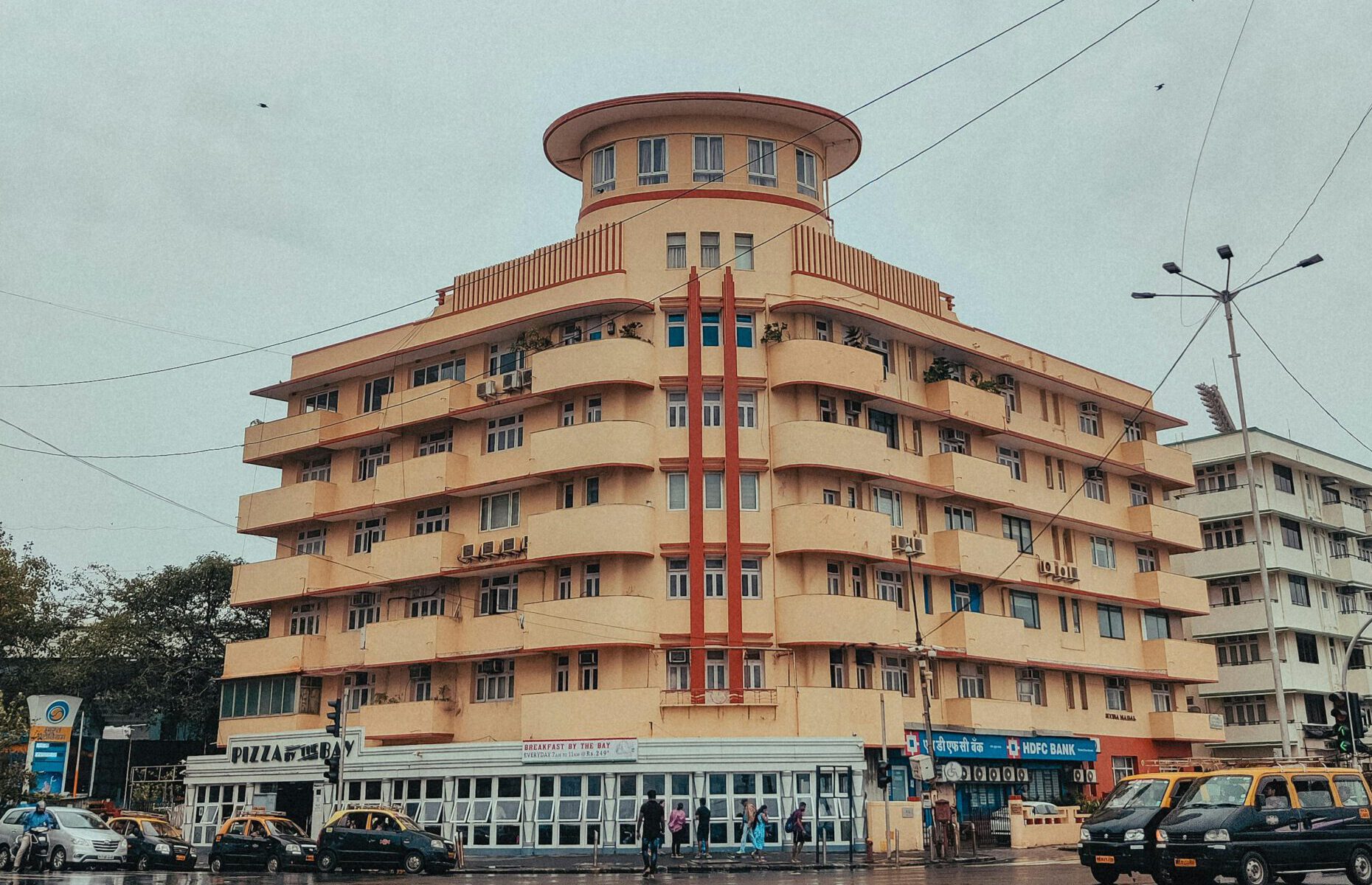
Further diving into the characteristics of the Art Deco style of building, she explained how it uses tropical features of the location these structures belong to in the decorative details. Suhasini presented pictures of a few examples, like the Sunshine Building and the Rajjab Mahal at Oval Maidan which feature stylised sunrays. The tropical features like waves, sunrays, moon, flora and fauna of the region are depicted through the grills and intricate sculptures. One iconic Art Deco building is the Shiv Shanti Bhuvan, whose highlight is the symmetrical sunshades (chajja). The residents of this building collectively decided to only get a window AC to maintain the aesthetics of the street-facing façade of the building.
The city also boasts this style of architecture in splendid recreational centres like cinema theatres. Suhasini named a few like Regal, Eros, Liberty and Metro. She mentioned, “Art Deco style is not just about the facade of the structure. It is also about the interiors of these structures that tell a story.” Highlighting the thoughtfulness of the architects and designers, she stated how these structures, which were built in the 1930s, have facilities like lifts and headphones attached to theatre seats.
The lecture ended with a short question and answer session where students asked their queries about the Art Deco architecture. Suhasini distributed a bookmark and a map of the Art Deco structures in Mumbai printed by the Art Deco Mumbai Trust. The lecture truly encourages the class to explore the architectural heritage of the places around the city.